
Affiliate marketing is changing fast. By 2025, new trends will reshape how products connect with consumers.
This industry drives sales and expands reach. AI, nano-influencers, and brand partnerships are rewriting the rules.
The affiliate marketing industry will grow by 7.7% yearly until 2030. New tech and strategies fuel this growth.
AI helps optimize campaigns. The Metaverse offers untapped potential for marketers.
Let’s explore key trends shaping affiliate marketing’s future. These insights are vital for success in this fast-paced field.
Key Takeaways
- Affiliate marketing is projected to grow at a 7.7% CAGR from 2023 to 2030
- AI and machine learning are revolutionizing campaign optimization
- Micro and nano-influencers are becoming increasingly important
- Brand-to-brand partnerships are on the rise
- Mobile optimization is crucial for success in affiliate marketing
- The Metaverse offers new opportunities for affiliate marketers
- Performance-based commissions are promoting win-win partnerships
Understanding the Current State of the Affiliate Marketing Industry
Affiliate marketing is growing fast. It’s now a key part of e-commerce growth plans.
Market Size and Growth Projections
The global affiliate sector is worth $1 billion in 2023. It’s set to hit $12 billion by 2026.
This growth shows how important affiliate programs are for retailers.
Key Industry Statistics and Trends
Affiliate marketing growth is clear in these stats:
- Businesses earn an average ROI of $6.50 for every dollar invested in affiliate marketing
- Over 80% of brands use affiliate marketing to drive leads and sales
- 62% of affiliate-driven traffic comes from mobile devices
Impact on E-commerce Growth
Affiliate marketing greatly affects e-commerce. It makes up to 20% of the yearly income for 65% of retailers.
By 2026, over 90% of e-commerce firms will use affiliate marketing.
| Year | Projected Industry Value | Expected Growth Rate |
|---|---|---|
| 2023 | $1 billion | 10.1% |
| 2026 | $12 billion | 10% annually |
| 2030 | $36.9 billion | 7.7% CAGR |
What is the future of affiliate marketing
Affiliate marketing is growing fast. Global spending could reach $15.7 billion by 2024.
AI and machine learning will change the game by 2025. They’ll improve campaign management, targeting, and tracking.
Mobile shopping is crucial now. Most people buy stuff on their phones.
Voice search is becoming more popular. It may be half of all searches by 2025.
Small influencers are gaining value. They often get more engagement than bigger names.
“71% of consumers trust advertising and product placements in influencer content, compared to just 38% for traditional online ads.” – Nielsen, 2021
Third-party cookies will be gone by 2025. Marketers will need to use first-party data instead.
Blockchain might make payments easier. It could also make transactions more clear.
Success depends on adapting to new tech. Creating real, valuable content is key too.
The Rise of AI and Machine Learning in Affiliate Marketing
AI and machine learning are changing affiliate marketing technology. These tools are improving campaign optimization, performance analysis, and audience targeting.
AI-Powered Campaign Optimization
AI is automating many tasks in affiliate marketing. It’s cutting time and effort for brands and marketers.
AI tools can improve sales, brand awareness, and overall image. They can reduce time spent on repetitive tasks by 30-40%.
Automated Performance Analysis
AI excels at analyzing large volumes of data. It can spot fraud patterns and give real-time alerts.
AI-driven analytics work up to 10 times faster than manual methods. This speed allows for quick, data-driven decisions.
Predictive Analytics for Better Targeting
Predictive analysis helps identify market trends and customer preferences. We can now predict future consumer behavior.
AI tools improve audience targeting, boosting conversion rates. Some affiliates see up to 30% more conversions with AI.
| AI Impact | Percentage |
|---|---|
| Task Automation | 70% |
| Conversion Rate Increase | 30% |
| Content Engagement Improvement | 50% |
AI is shaping the future of affiliate marketing. Over 60% of marketers expect big changes in 3-5 years.
These new tools are bringing impressive results across the board.
Evolution of Affiliate Marketing Commission Structures
Affiliate marketing strategies are changing fast. The future focuses on performance-driven models that benefit both parties.
Sophisticated commission structures are becoming more common. Tiered and lifetime commissions offer greater earning potential for affiliates.
| Commission Model | Description | Benefit |
|---|---|---|
| Pay-Per-Sale (PPS) | Affiliates earn a percentage of each sale | Direct link to revenue generation |
| Tiered Commission | Higher commission rates for better performance | Motivates affiliates to increase sales |
| Lifetime Commission | Ongoing earnings from referred customers | Encourages long-term customer retention |
New structures are proving effective. 65% of retailers say affiliate marketing boosts yearly earnings by 20%.
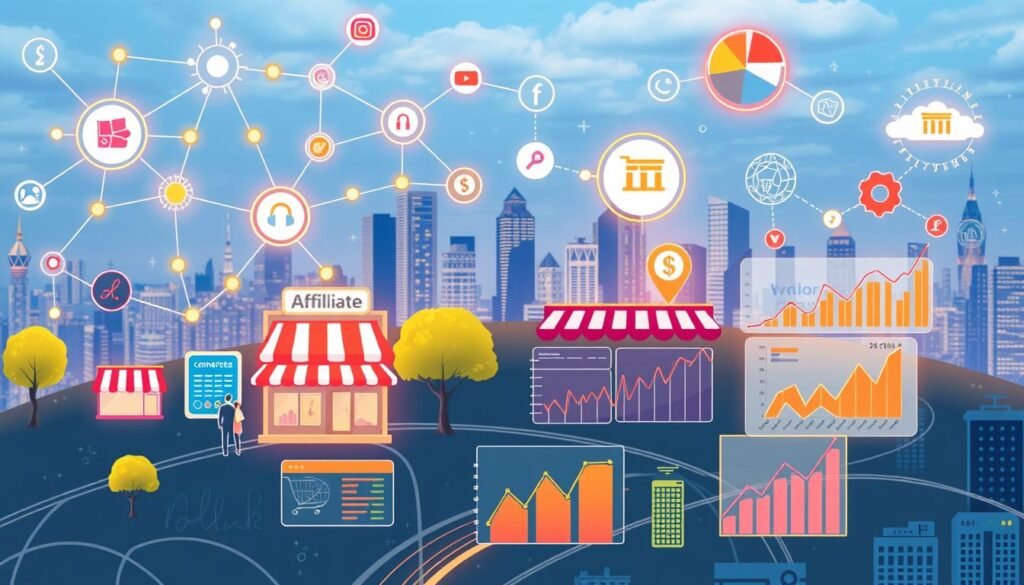
AI-driven personalization is the next big thing in affiliate marketing. It will use targeted analytics to boost revenue.
The Growing Impact of Influencer Partnerships
Influencer partnerships are changing affiliate marketing. They offer new chances for brands and marketers to grow.
These team-ups are changing fast. They’re now a key part of marketing plans.
Micro and Nano Influencer Opportunities
Micro and nano influencers are rising stars in affiliate marketing. They have 1,000 to 100,000 followers with high engagement rates.
Brands are paying attention. Fees for these influencers are up 10-20% each year.
Performance-Based Influencer Collaborations
Brands now pay influencers based on their results. This makes it easier to see how well partnerships work.
When brands mix influencer and affiliate programs, sales go up 46%.
Building Authentic Brand Relationships
Real connections matter in influencer partnerships. People trust individuals more than brands, even if they don’t know them.
This trust leads to results. Most B2B marketers see a better brand image through honest influencer teamwork.
| Metric | Impact |
|---|---|
| Brand Awareness Increase | 72% |
| Affiliate-Based Sales Increase | 46% |
| Health & Beauty Sector Sales Increase | 178% |
Influencer partnerships are now vital in affiliate marketing. They help brands reach new people and boost sales.
Using these partnerships well can build trust and grow your business.
Mobile-First Affiliate Marketing Strategies
Affiliate marketing is changing fast. Mobile devices now handle 42% of online sales in 2022.
By 2026, mobile shopping will grow from 6% to 8.7%. This shift makes mobile-first plans vital.
I’m making content that works well on phones. Short videos and simple graphics grab attention quickly.
TikTok and Instagram are great for reaching people on mobile devices.
I focus on mobile SEO and voice search. Fast sites and good keywords help search rankings.
Mobile apps offer new ways to make money and keep users interested.
“Clear calls-to-action on mobile can significantly increase clicks and conversions due to users’ preference for direct messaging.”
Ads based on location have changed my marketing plan. They help target nearby users and specific markets.
Mobile tools track how users engage. This info helps me improve my campaigns.
Mobile payment programs are exciting. They make buying easier and can boost sales.
Brand-to-Brand Partnership Opportunities
Brand-to-brand partnerships are changing affiliate marketing strategies. These partnerships create powerful marketing synergies for businesses.
Cross-Promotion Strategies
Non-competing brands team up to reach similar target audiences. This helps companies expand their reach to new customer bases.
A fitness app might partner with a healthy meal delivery service. This creates a win-win situation for both brands.
Collaborative Marketing Initiatives
Partnerships often involve joint campaigns using various channels:
- Co-branded products
- Joint email marketing campaigns
- Shared social media content
- Cross-platform promotions
Brands can create better marketing by working together. The affiliate channel helps track and improve these team efforts.
Mutual Audience Benefits
Brand-to-brand partnerships offer great benefits for audiences. Customers get access to products that work well together.
This fits with the trend of personalized, value-driven marketing.
“Brand-to-brand partnerships can lead to leveraging first-party data from complementary brands to counteract the loss of targeting due to the deprecation of third-party cookies.”
These partnerships will be key in future affiliate programs. They offer a new way to create unique value.
Brands can stand out in the busy online world with this approach.
Content Diversification and Marketing Channels
Affiliate marketing strategies are changing fast. Content variety and new marketing channels are key to success.
Video Content Integration
Videos are now crucial in affiliate marketing. TikTok, Instagram Reels, and YouTube offer great product showcasing options.
Short videos grab attention quickly. They deliver strong messages in a short time.
Social Media Platform Expansion
Social media remains powerful for affiliate marketers. Each platform has its special features.
Instagram has shoppable posts. Pinterest offers idea pins. Twitter provides carousel ads for target audiences.
Multimedia Content Strategies
Using different content types makes affiliate marketing more engaging. Blogs, podcasts, and infographics work together to build trust.
This method suits various learning styles. It caters to different consumer preferences.
Quality content will be crucial in 2025. It helps affiliates create better marketing strategies.
Good content drives traffic. It also builds strong customer relationships.
| Content Type | Engagement Rate | Conversion Potential |
|---|---|---|
| Short-form Video | High | Medium |
| Long-form Blog Posts | Medium | High |
| Podcasts | Medium | Low |
| Interactive Content | Very High | High |
Using varied content helps affiliate marketers stay ahead. It boosts their impact in the changing digital world.
Metaverse and Virtual Reality in Affiliate Marketing
Affiliate marketing is entering the Metaverse. This digital universe opens up new ways for marketers to reach customers.
The Metaverse is here to stay. It’s set to become an $800 billion market by 2024.
Big brands like Nike and Coca-Cola are already in this virtual world. Nike’s Jordan brand teamed up with Fortnite for in-game sales.
Virtual Reality (VR) will be key in this new world. The global VR market may hit $57.55 billion by 2027.
This growth means new ways to show products to customers. Marketers can create fun experiences that people will enjoy.
The future of affiliate marketing looks bright with these new tools. Many say it’s their best way to get new customers.
Those who use these new tech tools early will do well. The Metaverse and VR will shape how we market products.
Compliance and Regulatory Changes
The affiliate marketing industry faces stricter regulations. The FTC and FDA are cracking down on claims in affiliate campaigns.
This trend will likely continue. It will impact the future of affiliate programs.
FTC Guidelines and Regulations
By 2025, FTC rules will require clear disclosure of brand relationships. Affiliates must use phrases like “I earn commissions from these links”.
These disclosures should appear at the start of blog posts. They should also be in video descriptions.
Data Privacy Considerations
Data privacy rules are changing affiliate marketing strategies. GDPR requires consent for data collection from EU residents.
The CPRA makes businesses inform consumers about data collection. It also requires opt-out options for consumers.
Industry Standards Evolution
The affiliate marketing industry is becoming more transparent and ethical. This approach can boost consumer trust and increase conversion rates.
Conversion rates may rise by 15-20% with these changes.
| Regulatory Impact | Potential Outcome |
|---|---|
| Stricter FTC Guidelines | Clearer disclosures in affiliate content |
| Data Privacy Laws | Improved data handling practices |
| Ethical Marketing Focus | Increased consumer trust and conversions |
These changes might lower earnings-per-click for affiliates. They may also reduce conversion ratios.
But they’re vital for building a trustworthy affiliate marketing ecosystem.
Conclusion
Affiliate marketing is growing fast. The industry will reach $15.7 billion by 2025. Technology and consumer habits are changing the game.
AI and machine learning are key to success. They make campaigns more efficient and personal. AI boosts conversion rates and customer engagement.
Mobile and voice search will be crucial. Over half of the searches will be voice or visual. Micro-influencers and brand partnerships offer new growth chances.
The future is multi-channel. Start adapting now to stay ahead. Use AI and focus on mobile. Explore new partnerships to thrive in affiliate marketing.
FAQ
What are the key trends shaping the future of affiliate marketing?
AI and machine learning are changing affiliate marketing. Mobile strategies, influencer partnerships, and content diversity are also important trends.
Brand collaborations and virtual reality may impact future marketing efforts.
How is AI transforming affiliate marketing?
AI optimizes campaigns and analyzes performance automatically. It uses predictive analytics for better targeting, making marketing more efficient.
What changes are happening in affiliate marketing commission structures?
Commission structures are becoming more performance-driven. Tiered and lifetime commissions aim to align affiliate goals with business needs.
Why are micro and nano influencers becoming important in affiliate marketing?
Micro and nano influencers have high engagement rates. Their niche audiences make them valuable for targeted marketing campaigns.
How is mobile technology impacting affiliate marketing strategies?
Mobile tech drives the need for responsive design and app integration. It also requires creating content specifically for smartphones.
What opportunities do brand-to-brand partnerships offer in affiliate marketing?
Brand partnerships allow for cross-promotion and joint marketing efforts. They help expand reach and grow audiences for both brands.
How is content diversification changing affiliate marketing?
Video content and social media are creating new marketing opportunities. They offer engaging ways to run effective affiliate campaigns.
What role might the Metaverse play in the future of affiliate marketing?
The Metaverse could offer new ways to promote virtual products. It may change how marketers demonstrate products and create user experiences.
How are regulatory changes affecting affiliate marketing?
FTC and FDA scrutiny is shaping marketing practices. Data privacy laws like GDPR affect disclosure, claims, and data handling.
What are the growth projections for the affiliate marketing industry?
The affiliate marketing industry is expected to keep growing. More businesses are using it, boosting its impact on e-commerce.


0 Comments