
Some businesses thrive online while others struggle. Digital marketing is the key difference. It’s a game-changer in today’s business world.
Digital marketing drives modern business strategy. It reshapes how companies connect with their audience. Mastering it is crucial for success in our digital world.
Digital marketing uses many tactics and tools. These include social media campaigns and search engine optimization.
This guide breaks down these components for you. You’ll learn how they create a powerful online presence.
This guide offers insights for everyone. It’s useful for small business owners and marketing pros alike.
Key Takeaways
- Digital marketing is essential for business growth in the online world
- It involves various strategies like social media, SEO, and content marketing
- Understanding digital marketing basics is crucial for modern businesses
- Digital tactics offer more targeted and measurable results than traditional marketing
- Adapting to digital trends is key to staying competitive in today’s market
What is Digital Marketing: Understanding the Fundamentals
Digital marketing has changed how businesses talk to customers. Online methods have transformed old-school advertising approaches.
The Evolution of Marketing in the Digital Age
Marketing has grown beyond billboards and TV ads. Now, digital plans lead the way.
We’ve switched from one-way talks to chats with customers. Social media, email, and search engines help reach target groups.
Core Components of Digital Marketing
Digital marketing has many parts. These include:
- Search Engine Optimization (SEO)
- Content Marketing
- Social Media Marketing
- Email Marketing
- Pay-Per-Click Advertising
Each part helps make a full digital marketing plan. Together, they help businesses shine online and reach their audience.
Traditional vs Digital Marketing Approaches
Old-school marketing still works, but digital offers special perks. Here’s how they compare:
| Traditional Marketing | Digital Marketing |
|---|---|
| Limited audience reach | Global audience potential |
| One-way communication | Interactive engagement |
| Difficult to measure results | Easy to track and analyze |
| Higher costs | More cost-effective |
Digital plans offer better targeting and real-time results. They let you change campaigns quickly.
This makes online marketing great for all sizes of businesses.
The Digital Marketing Ecosystem and Its Channels
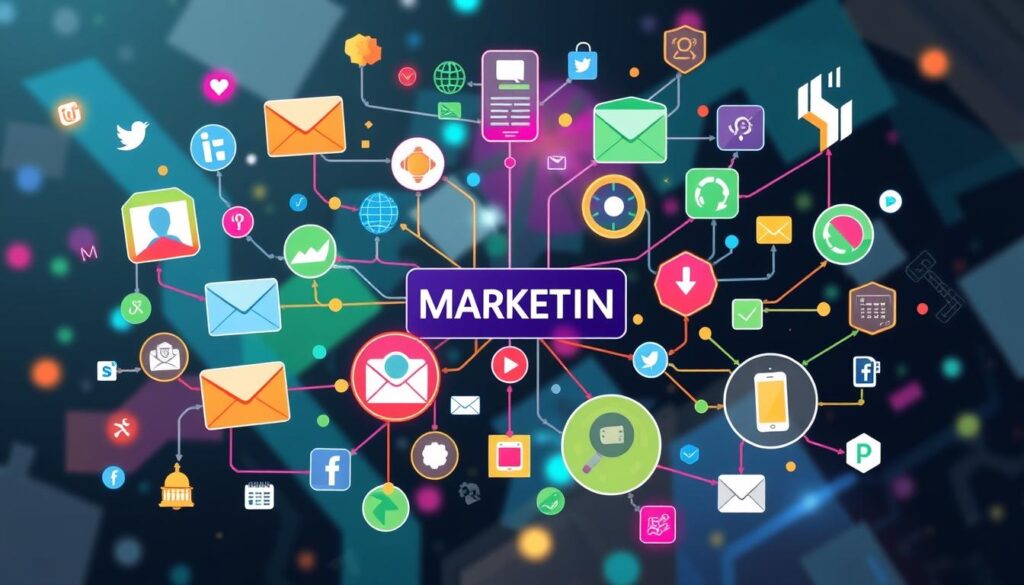
The digital marketing world has changed a lot. It’s a complex network of channels that work together.
These channels create powerful campaigns. Let’s explore the key parts of this web.
Digital Advertising Methods are at the heart of this ecosystem. These include SEO, social media, email campaigns, and pay-per-click ads.
Each channel helps reach and engage target audiences. Good marketers use many channels, not just one.
They mix different platforms to reach more people. Blog content can be used for social media and email newsletters.
Digital marketing is not about using one channel but orchestrating a symphony of channels to create a harmonious brand experience.
Let’s look at how these channels work together. Here’s a typical customer journey:
| Stage | Channel | Action |
|---|---|---|
| Awareness | Social Media | A customer browses product pages |
| Interest | Search Engine | Customers search for more information |
| Consideration | Website | A customer receives a promotional offer |
| Decision | The customer completes the purchase | |
| Purchase | E-commerce Platform | Customer completes the purchase |
Knowing this ecosystem helps create better marketing plans. It lets you reach people in many ways.
Using these Internet marketing channels can boost your online presence. Your brand can make a big impact.
Search Engine Optimization (SEO) as a Digital Marketing Pillar
SEO is vital in digital marketing. It boosts website visibility and drives organic traffic.
On-Page SEO Techniques
On-page SEO makes web pages better. Start with keyword research to understand your audience’s searches.
Create content using these keywords. Make great meta titles and descriptions for search results.
Off-Page SEO Strategies
Off-page SEO builds site authority. Create content others want to link to.
Guest posts on good sites. Join online talks to get quality backlinks.
Technical SEO Essentials
Technical SEO makes sites easy for crawlers. Check site speed, mobile friendliness, and XML sitemaps.
Use schema markup for rich snippets. It helps search engines understand your site better.
Master these SEO methods to rank higher on Web Marketing Platforms. You’ll get more targeted traffic to your site.
Content Marketing in the Digital Space
Content rules the digital world. It’s a vital part of effective Digital Marketing Strategies.
Content marketing creates and shares valuable material. It attracts and engages your target audience.
Successful content marketing uses diverse formats. Blog posts, videos, infographics, and podcasts engage users uniquely.
- Blog posts: Ideal for in-depth explanations and SEO
- Videos: Perfect for visual learners and social sharing
- Infographics: Great for presenting data in a digestible format
- Podcasts: Excellent for on-the-go consumption
Distribution is key to content marketing success. Use a mix of owned, earned, and paid media channels.
Measuring content marketing success is crucial—track metrics like engagement rates, time on page, and conversions.
“Content marketing is a commitment, not a campaign.” – Jon Buscall
Craft valuable content and distribute it strategically. This builds trust with your audience.
Consistency is key in content marketing. It’s a long-term investment in your brand’s digital presence.
Social Media Marketing: Platforms and Strategies
Social Media Marketing is a powerful tool in Digital Marketing Strategies. It can transform a business’s online presence through smart platform use.
Choosing the Right Social Media Platforms
Picking the right platforms is key. Focus on where your audience spends time.
For B2B, try LinkedIn. Instagram or Pinterest work for visual products. Facebook offers broad reach.
Creating Engaging Social Content
Content rules in Social Media Marketing. Authentic, value-driven posts work best.
Share behind-the-scenes peeks and user-generated content. Use videos, polls, stories, and live streams to keep followers interested.
Social Media Analytics and ROI
Measuring success helps refine Digital Marketing Strategies. Use platform-specific tools to track engagement, reach, and conversions.
| Metric | What It Measures | Why It’s Important |
|---|---|---|
| Engagement Rate | Interactions with your content | Shows how compelling your content is |
| Reach | Number of unique users who saw your post | Indicates the spread of your message |
| Conversion Rate | Percentage of visitors who take desired action | Directly ties to ROI |
Analyze these metrics to improve your Social Media Marketing efforts. Focus on building real connections with your audience.
Email Marketing Campaigns and Automation

Email marketing drives engagement and boosts conversions. It’s a game-changer in today’s digital world.
Building a solid email list is key. I offer value to subscribers through exclusive content and discounts.
Crafting compelling email content is an art. I keep messages short, personal, and action-driven.
A clear call to action guides readers on the next steps. It could be buying, reading, or signing up.
“Email has an ability many channels don’t: creating valuable, personal touches – at scale.”
Automation has changed email marketing campaigns. It sends targeted messages based on subscriber behavior.
This personalization improves open rates and click-throughs. Segmentation is another key strategy I use.
I divide my list based on demographics and purchase history. This approach leads to higher conversion rates.
Interactive emails are trending, and I love them. I use polls and clickable image carousels.
These features make emails fun and provide valuable data. They help me improve future campaigns.
Pay-Per-Click Advertising and Display Marketing
PPC ads and display marketing boost your online presence. These methods help reach your audience and maximize returns.
Google Ads Strategy
Google Ads is a key PPC player. Focus on keyword research and craft compelling ad copy.
Set up precise targeting and use ad extensions. Regular A/B testing can improve click-through rates.
Social Media Advertising
Social platforms offer unique ad opportunities. Facebook, Instagram, and LinkedIn allow for targeted campaigns.
Start with a small budget. Scale up as you learn what works for your audience.
Display Network Opportunities
Display ads show visual content across various websites. Google Display Network and programmatic platforms reach potential customers.
| Advertising Method | Key Benefit | Best For |
|---|---|---|
| Google Ads | High intent audience | Direct response campaigns |
| Social Media Ads | Precise targeting | Brand awareness and engagement |
| Display Networks | Wide reach | Retargeting and visual branding |
Mix these methods for a strong paid marketing plan. This approach supports your organic efforts and drives real results.
Analytics and Data-Driven Decision Making
Data rules in digital marketing strategies. Analytics can turn guesswork into precise campaigns.
Let’s explore important metrics and their effective use.
Key Performance Indicators (KPIs)
KPIs are vital signs of digital marketing efforts. I track conversion rates, click-through rates, and customer lifetime value.
These indicators help gauge campaign health and guide decisions.
| KPI | Description | Importance |
|---|---|---|
| Conversion Rate | Percentage of visitors who take desired action | Measures effectiveness of landing pages |
| Click-Through Rate | Percentage of users who click on a specific link | Indicates ad or content relevance |
| Customer Lifetime Value | Total revenue expected from a customer | Guides customer acquisition spending |
Tools for Tracking Success
I use various tools to track digital marketing performance. Google Analytics helps analyze website traffic.
Social media platforms offer built-in insights. Mailchimp monitors email marketing engagement.
Data Interpretation and Implementation
Collecting data is just the start. I look for trends and opportunities.
Traffic spikes guide channel focus. Engagement drops prompt content strategy changes.
Constant analysis keeps digital marketing strategies sharp and effective.
Staying agile with data helps beat the competition in online marketing.
Mobile Marketing and App Promotion
Mobile marketing has changed how businesses reach customers. It’s now a key part of digital marketing strategies.
Mobile marketing targets customers on smartphones and tablets. It’s a vital part of internet marketing channels.
Creating mobile-friendly content is crucial for user engagement. SMS marketing allows direct communication with customers.
Location-based marketing targets users based on their location. App Store Optimization (ASO) helps apps rank higher in searches.
- Compelling app title and description
- Eye-catching icons and screenshots
- Positive user reviews and ratings
Mobile-optimized websites ensure a smooth user experience. They work well on all devices.
These tactics help reach people on their mobile devices. It’s an exciting area in digital marketing.
Conclusion
Digital marketing drives modern business success. It includes SEO, social media, content creation, and email campaigns.
Digital marketing has grown beyond just having a website. It now involves building a strong online presence across many platforms.
This approach helps businesses connect with their target audience effectively.
Digital marketing is always changing with new tools and trends. Keep learning and adapting your strategies to stay ahead.
Start small and test different approaches. Track your results to find the best tactics for your business.
Now, it’s time to use these ideas. Watch your online presence grow!
FAQ
What is digital marketing?
Digital marketing promotes products or brands through online channels. It connects businesses with audiences who spend time on the internet.
This approach is vital for companies aiming to succeed online.
How does digital marketing differ from traditional marketing?
Digital marketing uses online platforms instead of TV or print. It offers precise targeting and real-time engagement.
This method is often cheaper and allows easy campaign adjustments.
What are the main channels of digital marketing?
Key channels include SEO, social media, email, and content marketing. PPC advertising and affiliate marketing are also important.
A mix of these channels works best for specific goals.
How important is SEO in digital marketing?
SEO is crucial for ranking higher in search results. It improves visibility and credibility for your business.
Good SEO practices can boost your website’s traffic and sales.
What’s the role of content in digital marketing?
Content is the heart of digital marketing strategies. It fuels SEO efforts and drives social media engagement.
Quality content attracts customers and builds brand authority online.
How can I measure the success of my digital marketing efforts?
Track website traffic, conversion rates, and social media engagement. Measure email open rates and ad spend ROI.
Use tools like Google Analytics to monitor your performance.
Is email marketing still effective?
Yes, email marketing remains highly effective in digital strategies. It allows for personal and targeted messaging.
Well-crafted email campaigns can provide great value to subscribers.
How often should I post on social media?
Aim for at least one post daily on most platforms. Tailor your frequency to your audience and platform.
Focus on quality content rather than overwhelming your followers.
What’s the future of digital marketing?
AI personalization and voice search optimization are growing trends. Video content and interactive experiences will become more important.
Stay adaptable as the digital landscape continues to change.
How can I get started with digital marketing for my small business?
Define your goals and understand your target audience first. Build a user-friendly website and create valuable content.
Expand into social media and email marketing gradually. Experiment and learn as you go.



0 Comments