

Successful affiliate marketers know the secret to high commissions. It’s all about smart link placement and promotion.
Affiliate marketing benefits both companies and promoters. Companies get more sales, while affiliates earn money.
Well-placed affiliate links can boost click-through rates by 25-40%. Personalized email tips can increase sales by 14%.
Let’s explore the best ways to place and promote affiliate links. We’ll cover choosing partners and creating content that sells.
Key Takeaways
- Strategic link placement can significantly boost click-through rates
- Personalized recommendations increase transaction rates
- Diverse promotional channels lead to higher sales conversions
- Video content enhances user engagement for affiliate promotions
- Email marketing remains a highly effective channel for affiliate links
Understanding Affiliate Marketing Fundamentals
Affiliate marketing helps businesses grow and sell more. U.S. companies spent $9.56 billion on it in 2023.
This amount may reach $10.72 billion in 2024. Let’s explore this exciting industry and its key strategies.
How Affiliate Programs Work
Affiliate marketing involves sellers, affiliates, and consumers. I promote products and earn money when people buy through my links.
The main payment model is Pay-Per-Sale (PPS). I get a part of each sale I create.
Benefits of Affiliate Marketing
Businesses can save up to 50% on getting new customers. Companies use skilled marketers while focusing on their main work.
As an affiliate, I can promote many products. I also have a chance to earn money without constant work.
Key Components of Successful Affiliate Programs
Placing affiliate links well is very important. A narrow focus helps target better and improves SEO.
Commissions can be from 5% to 50%. Some programs even offer 100% commission on the first month’s sale.
“Affiliate marketing can increase retail revenue by up to 30%.”
Good strategies help businesses and affiliates do well. Understanding these basics is key to success in this growing field.
What are the best practices for affiliate link placement and promotion
Mastering affiliate link placement and promotion is crucial for success. Let’s explore strategies that can boost your affiliate marketing efforts.
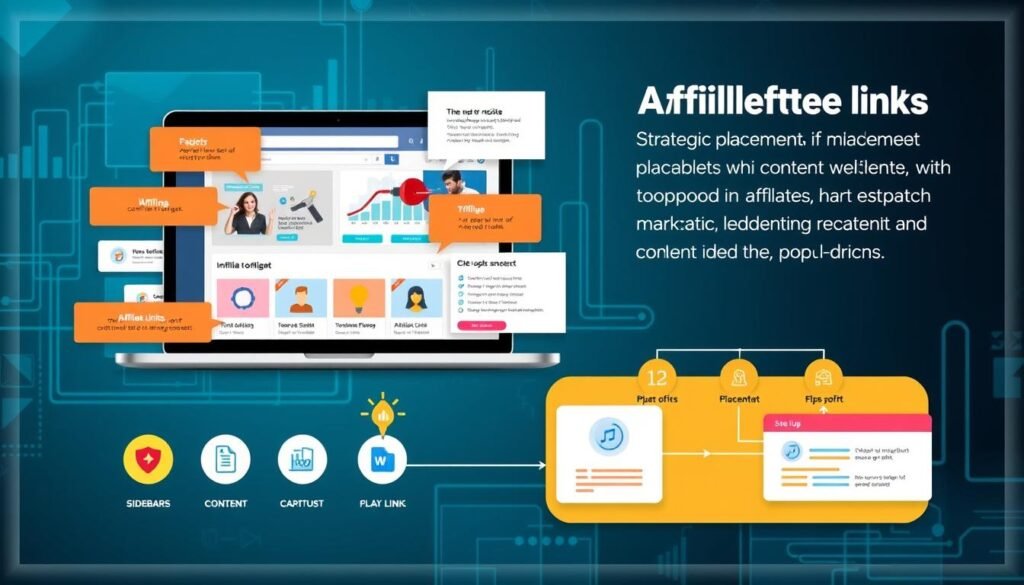
Content is king in affiliate marketing. High-quality tutorials and product reviews are essential for success.
These formats account for 90% of successful content-focused affiliate marketing campaigns. Strategic placement of affiliate links is key to optimizing results.
Incorporating affiliate links in emails can boost click-through rates by 38%. Product roundups yield a conversion rate of about 15%.
Transparency builds trust and complies with FTC guidelines. Disclosing affiliate links can increase consumer trust by 30%.
- Create engaging tutorials and product reviews
- Use strategic email marketing
- Implement product roundups
- Practice transparency with link disclosures
Following these practices can improve your conversion rates significantly. You can build a sustainable affiliate marketing business with these strategies.
Setting Clear Goals and Measurable Objectives
Setting clear goals is crucial for any successful affiliate program. Let’s explore some tips to establish measurable objectives and track progress effectively.
Defining SMART Goals for Your Affiliate Program
SMART goals are a game-changer for affiliate program strategies. Aim to increase monthly revenue by 20% or generate 1000 leads.
Cozy Earth saw a 912:1 return on investment through its affiliate program. This shows the power of well-defined goals.
Establishing Key Performance Indicators (KPIs)
Identifying the right KPIs is essential for measuring success. Some key metrics to track include:
- Revenue and commissions
- Traffic and bounce rate
- Click-through rate (CTR)
- Conversion rate
- Email subscribers, open rate, and click rate
Tracking and Measuring Success
Effective tracking is vital for optimizing your affiliate marketing efforts. Did you know that 83% of advertisers add new affiliates monthly?
This shows the importance of regular performance monitoring. Advanced tracking helps identify top-performing affiliates and improve conversion tactics.
“A well-structured affiliate marketing program can yield a 40% increase in affiliate-driven sales within six months when customized to align with brand and business goals.”
Setting clear goals and tracking progress are key to mastering affiliate marketing. Follow these tips to create a successful and profitable program.
Choosing the Right Commission Structure
A good commission structure is key for a successful affiliate program. It can attract top affiliates and boost sales growth.
Let’s look at important factors for setting up your commission model.
Commission Rate Considerations
Balance profitability with competitive offerings when setting commission rates. Average rates in affiliate programs range from 5% to 30%.
Retail and eCommerce rates are usually 5% to 15%. Digital products can offer up to 50% due to lower costs.
Tiered Commission Models
A tiered structure can greatly improve your affiliate program. It rewards top affiliates with higher rates as they reach sales goals.
A2 Hosting uses tiers: $55 per sale for the first 10 sales. Rates increase for more sales.
Performance-Based Incentives
Add performance-based incentives to boost your affiliate marketing. These can include bonuses, exclusive promos, or higher rates for top performers.
This strategy can motivate affiliates to work harder in their promotions.
| Commission Type | Description | Example |
|---|---|---|
| Flat Rate | Fixed amount per sale | $20 per sale |
| Percentage | Percentage of sale amount | 10% of each sale |
| Tiered | Increasing rates based on performance | 5% for first 10 sales, 7% for next 10 |
Find the balance between attractive commissions and sustainable profit margins. This is key for a successful affiliate program.
Use these tips to create a thriving affiliate network.
Strategic Affiliate Link Placement
Effective affiliate link placement is key for maximizing conversions. Links work best when integrated into relevant content or product reviews.

Contextual links are powerful in affiliate marketing. They can boost click-through rates by up to 40%.
Embedding links naturally within content improves user experience. It also increases engagement with your audience.
Call-to-action buttons can greatly increase conversion rates. I use clear language that encourages clicks without being pushy.
- Use varied link types (text, image, video) to boost engagement by 15-30%
- Implement link tracking to increase revenue by up to 30%
- Optimize anchor text for a 20% increase in click-through rates
Proper disclosure builds trust with your audience. Being open about affiliate relationships can improve conversion rates.
“Effective link placements can reduce bounce rates by as much as 50%, leading to longer site visit durations.”
Strategic placement is about creating value for your readers. Share your experiences and offer detailed reviews.
Focus on helping your audience. This approach can improve conversion rates by up to 20%.
Selecting and Managing Affiliate Partners
Choosing the right affiliates is key to a successful program. Factors like audience match and content quality help identify suitable partners.
Let’s explore some strategies that can boost your affiliate program’s success.
Identifying Suitable Affiliates
I focus on affiliates whose audience aligns with my target market. It’s crucial to find partners who share your brand values.
Here’s what I look for:
- Target audience match
- Industry experience
- Content quality
- Engagement levels
Screening Process and Quality Control
A thorough screening process protects your brand reputation. I use manual review and automated tools to vet potential affiliates.
This helps remove fraudulent or underperforming partners.
| Metric | Industry Average | Goal |
|---|---|---|
| Fraudulent Partners | 92% | <5% |
| ROI | 15-30% | >25% |
| Monthly Sales Increase | 20% | 25% |
Building Long-term Relationships
Nurturing relationships with affiliates is crucial for success. Regular communication, support, and growth opportunities are key.
Transparent payout terms and performance bonuses can boost affiliate motivation and loyalty.
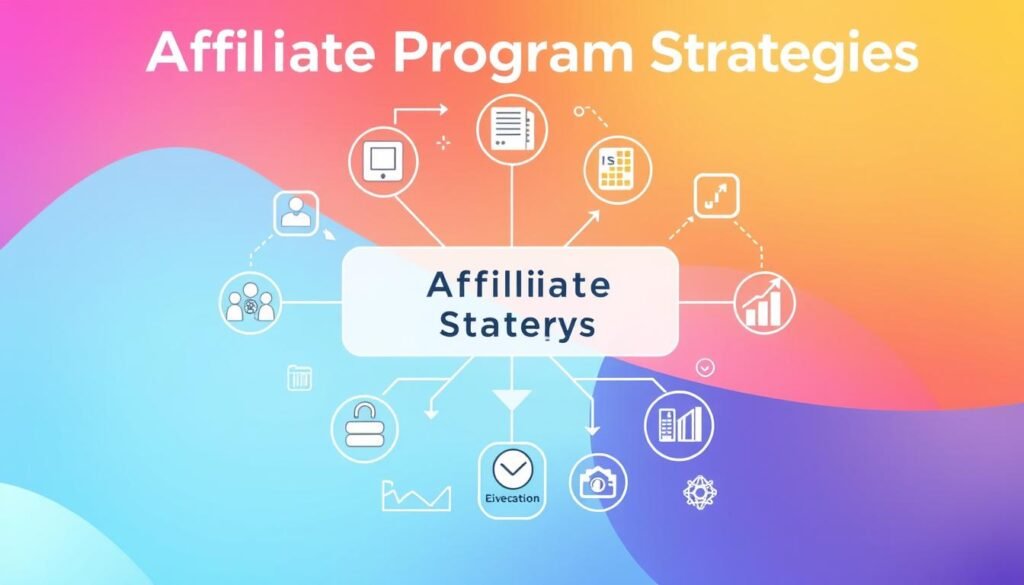
Selecting and managing affiliates requires ongoing effort and adaptation. These strategies will help you build a strong, profitable affiliate network.
Creating Effective Promotional Materials
Compelling promotional materials are vital for successful affiliate link promotion. Let’s explore some key guidelines for creating eye-catching banners and content.
Design Guidelines for Banners and Creatives
Clean, visually appealing layouts grab attention in banner design. I use high-quality images, bold colors, and clear calls to action.
Minimal text ensures readability across devices. Placing banners higher on web pages often leads to more clicks.
Content Marketing Resources
I offer affiliates various content marketing resources to boost their promotions. This includes product descriptions, reviews, and comparison charts.
Product reviews and tutorials often yield the best results for affiliates. They target users with purchase intent, increasing conversion chances.
Brand Consistency Requirements
Brand consistency is crucial across all affiliate promotions. I set clear guidelines for logo usage, color schemes, and messaging tone.
This aligns promotional materials with brand identity while allowing creative freedom. Consistency builds trust and recognition, key for optimizing affiliate links.
| Promotional Material | Effectiveness | Best Practices |
|---|---|---|
| Banners | High click-through rates when placed strategically | Use eye-catching designs, and clear CTAs, and place them higher on a webpage |
| Product Reviews | Highly effective for conversions | Provide honest, detailed reviews with affiliate links |
| Email Newsletters | 4-12% click-through rate for affiliate promotions | Use eye-catching designs, and clear CTAs, and place them higher on webpage |
| Video Content | 54% of consumers prefer video content from brands | Create engaging tutorials, include affiliate links in descriptions |
These guidelines and content formats can boost affiliate marketing performance. The key is providing value while smoothly integrating affiliate promotions.
Implementing Tracking and Analytics
Tracking and analytics are vital for successful affiliate marketing. Companies have doubled their spending in this area over the past decade.
The U.S. leads the global market in affiliate marketing. Let’s explore some tips for optimizing affiliate links through effective tracking.
Cookie-based tracking is losing effectiveness. I’m now using pixel-based and server-to-server tracking for more precise attribution.
These methods adapt well to changing privacy policies. They provide robust insights without relying on cookies.
Key metrics I monitor include click-through rates, conversion rates, and average order value. Well-optimized affiliate links can achieve 5-10% conversion rates in ideal scenarios.
Using UTM parameters has improved my tracking accuracy by 25-40%. This gives me clearer insights into traffic sources.
- 70% of affiliate marketers miss opportunities by neglecting link tracking
- Link cloaking can increase engagement rates by 15-20%
- Affiliates using tracking parameters see a 30% increase in revenue on average
I’ve integrated Google Analytics (GA4) to track outbound clicks. Over 60% of visitors engage with at least one affiliate link on my site.
This data helps me refine my strategies and boost my performance.
| Tracking Method | Benefits | Drawbacks |
|---|---|---|
| Cookie-based | Identifies returning visitors | Declining effectiveness due to privacy changes |
| Pixel-based | More precise attribution | Limited demographic insights |
| Server-to-server | Robust, cookie-free tracking | More complex implementation |
These tracking and analytics strategies have improved my affiliate marketing performance. I’ve gained valuable insights to guide my future efforts.
Compliance and Legal Considerations
Staying legal in affiliate marketing is vital. Following best practices builds trust and avoids legal issues.
FTC Disclosure Requirements
The FTC requires clear disclosure of affiliate relationships. I always tell my audience when I’m using affiliate links.
This builds trust with my followers. It’s not just a legal requirement.
Terms and Conditions
Solid terms and conditions are key for affiliate programs. These outline commission structures, payment terms, and prohibited practices.
They protect me and my affiliates from misunderstandings. They also help avoid potential disputes.
Cookie Policies and Privacy Concerns
I ensure my cookie policies meet data privacy laws. GDPR and CCPA are important regulations to follow.
Here’s a quick look at some key privacy regulations:
| Regulation | Key Requirements |
|---|---|
| GDPR (EU) | Explicit consent for data collection, user rights for data access and deletion |
| CPRA (California) | Inform consumers about data collection, allow opt-out of data selling |
| LGPD (Brazil) | Consent for data processing, access and deletion rights |
| PIPEDA (Canada) | Consent for data collection, emphasis on data security |
Staying informed and compliant keeps my program legal. It also makes my affiliate program trustworthy.
Compliance builds a sustainable, ethical affiliate marketing business. Following these guidelines creates trust with affiliates and customers.
Optimizing Program Performance
Boosting your affiliate program’s performance is key to success. Focus on conversion rates, testing strategies, and using the right tools.
These steps can make a big difference in your affiliate marketing journey.
Conversion Rate Optimization
To increase your conversion rates, consider these strategies:
- Improve landing page design
- Streamline the checkout process
- Personalize the user experience
These changes can boost your daily income potential. Effective strategies can earn you $100 to $300 per day.
Testing and Improvement Strategies
A/B testing is crucial for optimizing affiliate links. Try different placements, designs, and call-to-actions.
Well-crafted CTAs can increase engagement rates. They provide clarity and urgency to your audience.
Performance Monitoring Tools
Using the right tools is essential for tracking your program’s performance. Here’s a breakdown of key metrics and tools:
| Metric | Tool | Importance |
|---|---|---|
| Click-through rates (CTR) | UTM parameters | High |
| Conversion rates | Analytics software | Critical |
| User behavior | Heatmaps | Medium |
| Mobile traffic | Mobile analytics | High (50% of web traffic) |
About 50% of web traffic comes from mobile devices. Optimizing your affiliate links for mobile users is crucial.
Monitor these metrics and make data-driven adjustments. This can significantly improve your affiliate program’s performance.
Conclusion
Affiliate marketing needs a smart plan to succeed. It offers great earning chances, but trust is key. Follow these tips to boost your efforts and stay legal.
Put affiliate links in good content wisely. Use the right words and keep links fresh. Don’t forget about mobile users. They make up over 54% of web traffic!
Smart link placement can boost clicks by 90%. Good call-to-action phrases can raise sales by 25%.
Always tell people about your affiliate links. This builds trust with your readers. Honest affiliate marketing often leads to better results.
Use these tips to create a strong affiliate strategy. You’ll be on your way to success in no time.
FAQ
What are the key components of successful affiliate programs?
Successful affiliate programs need compelling offers and attractive commission structures. They also require quality products, reliable tracking, and clear program terms.
Effective communication and ongoing support for affiliates are crucial too.
How can I set SMART goals for my affiliate program?
Set specific, measurable goals like increasing affiliate-driven sales by 20%. Make sure they’re achievable and relevant to your business objectives.
Use tracking tools to monitor progress within a set timeframe.
What are some effective strategies for affiliate link placement?
Integrate links naturally within content and use product reviews. Create resource pages and leverage social media posts.
Use a mix of text links and banner ads in contexts that provide value.
How can I attract high-quality affiliates to my program?
Offer competitive commission rates and excellent products or services. Provide user-friendly promotional materials and reliable tracking with timely payments.
Reach out to niche influencers and participate in affiliate marketing forums.
What are the FTC disclosure requirements for affiliate marketing?
The FTC requires clear disclosure of affiliate relationships near the recommendation. Use plain language like, “This post contains affiliate links.
I may earn a commission if you make a purchase through these links.”
How can I optimize my affiliate program’s performance?
Focus on conversion rate optimization and regularly test different strategies. Use performance monitoring tools to track key metrics.
Provide ongoing training for affiliates and adjust your program based on data.
What are some effective affiliate link promotion techniques?
Create high-quality content around the product and leverage email marketing. Use social media strategically and create video content or tutorials.
Participate in relevant online communities and use retargeting ads.
How important is tracking and analytics in affiliate marketing?
Tracking and analytics are crucial for measuring affiliate performance. They help identify top performers and understand customer behavior.
Good tracking systems build trust by ensuring accurate attribution and timely payments.
What should I consider when creating promotional materials for affiliates?
Consider your brand identity and target audience preferences. Provide various formats and sizes of mobile-friendly, customizable materials.
Include clear calls-to-action and compelling copy. Offer guidelines for brand consistency.
How can I ensure compliance with data protection regulations in my affiliate program?
Be transparent about data collection and usage. Obtain necessary consents and implement secure data handling practices.
Update your privacy policy and educate affiliates about compliance requirements.






0 Comments